
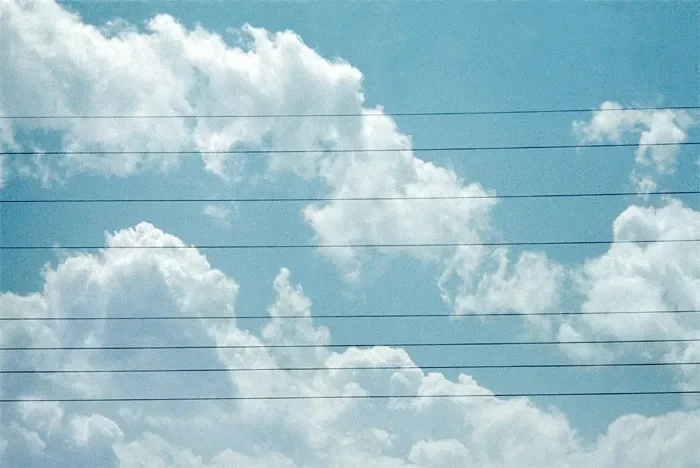
For Luigi Ghirri, photography was “a language for seeing and not for transforming, hiding, or modifying reality.” In Kodachrome (1978), he wrote that “beyond all critical and intellectual explanations… photography is… a formidable visual language for fostering this desire for the infinite that inhabits each of us.” That idea — the infinite tucked inside the ordinary — sits at the heart of his work.
Ghirri was drawn to the seaside and to clouds, to windows, to man-made landscapes, and to moments when “the world of signs merges with the physical world.” I also love his images of images — postcards, billboards, the backs of structures — where representation folds in on itself.
Part of why his work speaks to me is personal: he often photographed mundane scenes in Switzerland, where I grew up, and that everyday familiarity edges into Fischli/Weiss territory in the best possible way.
Ghirri died in 1992 at only 49, leaving behind a body of work that continues to shape how we look, and what we think a photograph can hold.